
Hydraulic Cylinders vs. Pneumatic Cylinders: How to Choose the Right Option for Your Application
In industrial automation, manufacturing, and heavy equipment, linear motion is often achieved using cylinders powered by fluid or air pressure. Two of the most common options are the hydraulic cylinder and the pneumatic cylinder, both of which convert pressure into mechanical motion.
Keep reading to learn more about the differences between hydraulic and pneumatic cylinders, the strengths of each, and how to determine which solution fits your needs.
Understanding the Basics
At a high level, the difference between a hydraulic cylinder and a pneumatic cylinder comes down to the medium used to generate motion.
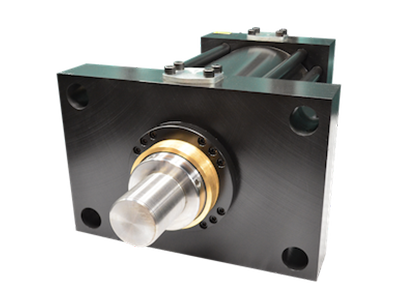
A hydraulic cylinder uses pressurized liquid—usually oil—to generate linear force. Because liquids are nearly incompressible, hydraulic systems can deliver very high force and precise motion. These cylinders are widely used in construction equipment, industrial presses, and heavy manufacturing machinery.
A pneumatic cylinder, on the other hand, uses compressed air to produce motion. Air is compressible, meaning the system behaves differently in terms of speed, control, and force output. Pneumatic systems are common in automated manufacturing lines, packaging systems, and light industrial equipment.
Both technologies are forms of linear actuators, meaning they produce motion in a straight line to push, pull, lift, or position mechanical components.
How a Hydraulic Cylinder Works
A hydraulic cylinder operates by forcing pressurized fluid into a chamber containing a piston. As pressure increases, the piston moves inside the cylinder barrel, pushing or pulling a rod connected to the load.
Because hydraulic fluid is essentially incompressible, the motion of a hydraulic cylinder is extremely precise and capable of generating large amounts of force. In many industrial environments, hydraulic systems operate at pressures ranging from 1,000 to 5,000 PSI or higher.
Common Applications
Hydraulic cylinders are typically used in environments that require:
- Heavy lifting or high force output
- Precise positioning under load
- Continuous industrial operation
- Durable systems for harsh environments
Typical examples include:
- Excavators and heavy construction equipment
- Metal forming presses
- Industrial manufacturing machinery
- Agricultural equipment
- Hydraulic lifts and elevators
Because of their power and reliability, a hydraulic cylinder is often the preferred choice when strength and precision are critical.
How a Pneumatic Cylinder Works
A pneumatic cylinder uses compressed air rather than liquid to move a piston and generate linear motion. Air pressure is supplied by a compressor and directed through valves into the cylinder chamber.
When compressed air enters the cylinder, it pushes the piston forward. When the air is released or redirected, the piston retracts.
Pneumatic systems generally operate at much lower pressures—typically around 80 to 100 PSI—making them safer and simpler than many hydraulic systems.
Common Applications
A pneumatic cylinder is often used in applications where speed and simplicity are more important than raw power. These systems are frequently found in:
- Packaging equipment
- Assembly lines
- Conveyor systems
- Automated manufacturing equipment
- Pick-and-place robotics
Because compressed air systems are relatively inexpensive and easy to maintain, pneumatic solutions are widely used in high-speed industrial automation.
How to Choose the Right Cylinder for Your Application
When deciding between a hydraulic cylinder and a pneumatic cylinder, engineers typically consider several important factors:
- Load Requirements: If your application requires high force or heavy lifting, a hydraulic system is usually the best choice.
- Speed and Cycle Rate: For fast, repetitive motions—especially in automation—a pneumatic cylinder may be more efficient.
- Precision Needs: Applications requiring exact positioning often benefit from the controlled motion of a hydraulic cylinder.
- Cost and Infrastructure: Pneumatic systems tend to have lower upfront costs, while hydraulic systems may require more specialized infrastructure.
- Environmental Conditions: If leaks or contamination could be a concern, a pneumatic cylinder may be a safer option.
By evaluating these factors together, engineers can determine which technology provides the best balance of performance, cost, and reliability.
Supporting Your Systems with Air & Hydraulic Equipment
Air & Hydraulic Equipment has more than 50 years of experience providing industrial fluid power solutions, including hydraulic cylinders, pneumatic components, and custom system support. Our team works with a wide range of manufacturers and technologies to help customers identify the right components and maintain optimal equipment performance.
To learn more about available products and services, visit us at Air & Hydraulic Equipment for expert guidance on your next project.